case study · 2026 · ● Live · v2
CivicSync PH
Receipts and a civic watchlist for Philippine legislation. Search any senator or representative and see every bill they've authored across 13 Congresses back to 1987. Track where each bill sits, read plain-language summaries, and follow bills with no account needed.
The problem
Every bill filed in the Philippine Congress is public record. But "public" isn't the same as accessible. The records are split across two chamber websites, each with its own formats and numbering, and both were built for desktop in a country where most people get online through their phones.
The 20th Congress, which opened in July 2025, has already seen more than 13,000 bills filed. If you wanted to know what your senator or representative has actually filed, you had to dig.
What I built
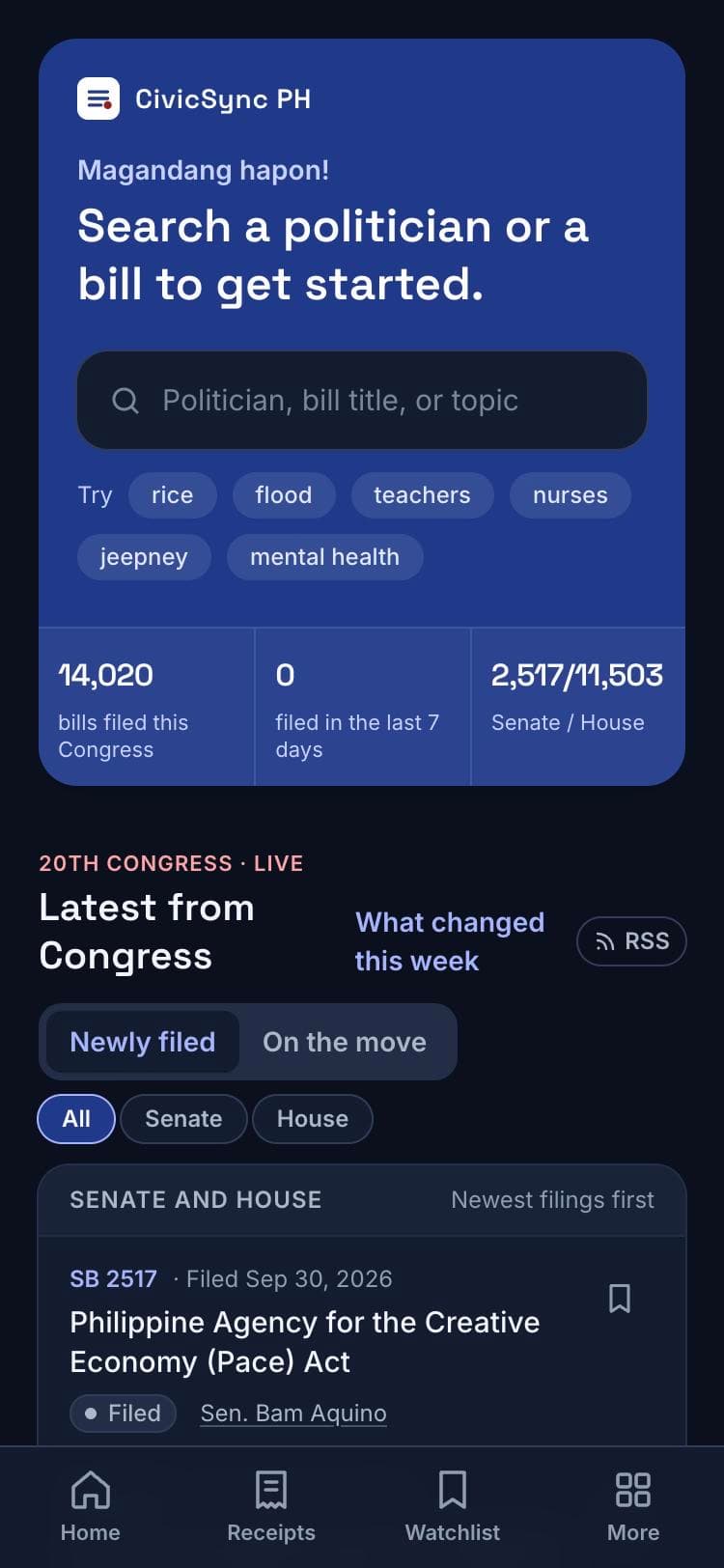
CivicSync PH is a free, mobile-first web app you can install straight from the browser. No account, no sign-up.
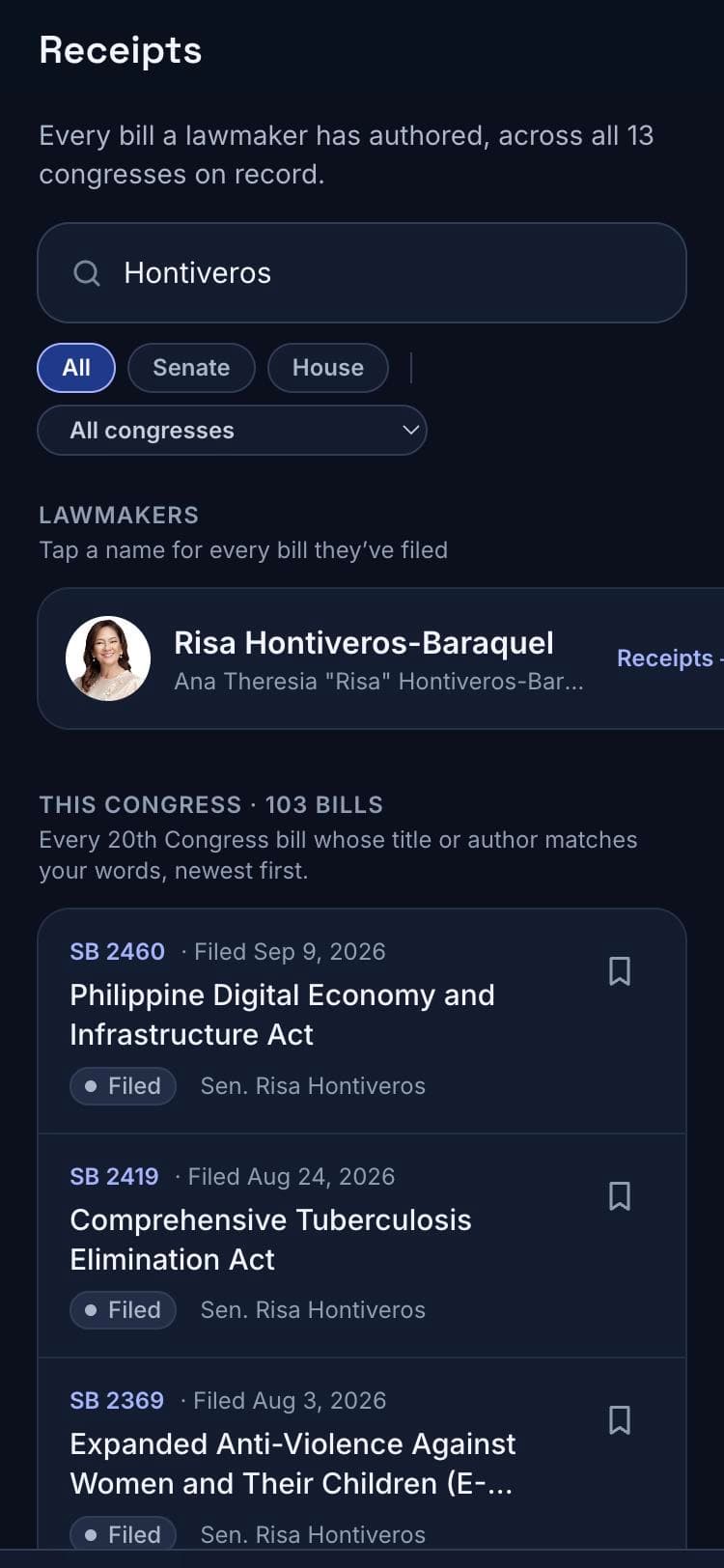
- Receipts: search any senator or representative and see every bill they've authored, across 13 congresses back to 1987.
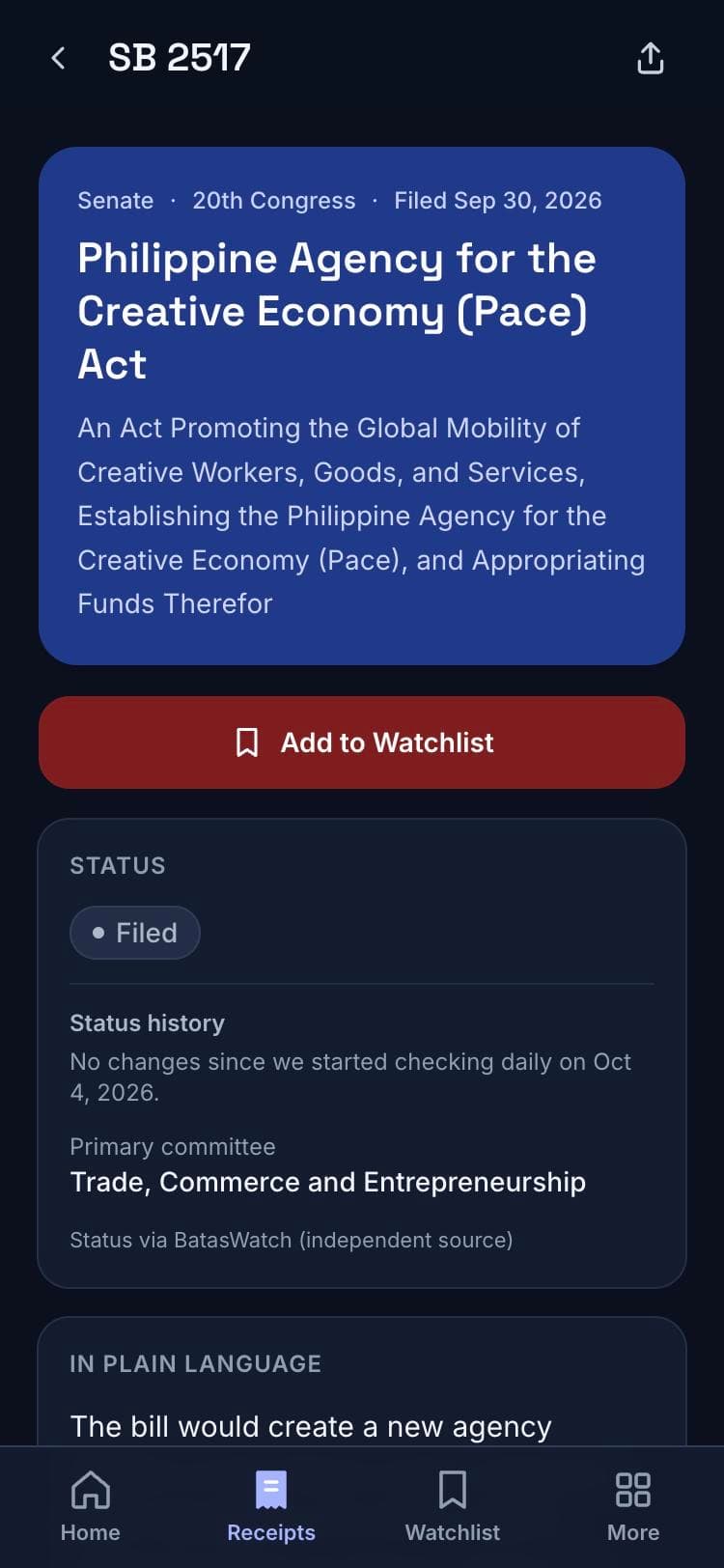
- Bill tracking: see where a bill is now and which committee it's sitting in, with a plain-language summary and links back to the official record.
- Watchlist: follow the bills you care about. It lives on your device, and syncs if you choose to sign in.
- Latest from Congress: a live feed of newly filed bills, a "what changed this week" view, and an RSS feed.
It doesn't replace the official Senate and House records. It helps people actually use them.
How it works
CivicSync stands on the shoulders of two Filipino civic-tech projects: BetterGov's Open Congress API, for lawmaker profiles and bill history from the 13th Congress on, and BatasWatch, for live status, committees and summaries in the 20th Congress.
The hardest part was reconciling them. The two sources number the same bill differently, search differently, and in places disagree. Some lawmakers appear twice; some share a surname. So each bill gets exactly one address and one Watchlist entry, and lawmaker pages match on full author credits rather than just surnames.
It's built with Next.js, Tailwind and Firebase, works offline for pages you've visited, and the site copy is managed in Sanity so it can change without a redeploy. When the live data source is down, the app says so plainly and keeps everything else working.
Building with AI
I built CivicSync with AI as a development partner. That didn't mean letting it write the app. It meant working through real problems together: verifying quirks against live API responses, deciding what to do when sources disagree, and writing down the risks I chose to accept for v1.
What's new in version 2
Version 2 grew CivicSync from a lookup tool into something you can follow over time.
- Notifications: get told when a bill on your Watchlist moves.
- Status history: every 20th Congress bill is checked daily, so each one has a timeline, and there's a "what changed" view for the week.
- Laws: bills that became law carry a badge with their Republic Act number, and a laws tracker reads each law's deadline for its implementing rules (IRR).
- Lawmakers: a sortable table of every lawmaker's record, with up to three compared side by side, plus photos, co-authors and committees.
- Open data: RSS feeds (including one for your own Watchlist), downloadable data, a public bill-status API and a browser extension.
- Faster and kinder: CivicSync's own search index, a server in Singapore closer to Filipino users, a lighter first load, dark mode, and an accessibility pass.
What's next
The roadmap is public, and anyone can suggest and vote on what comes next on the feedback board.
CivicSync PH is open source under the AGPL.